Book_01 — The Authentication Inheritance Problem
Why SQL Server’s Windows Authentication Was Good Engineering, and Why It Must Now End
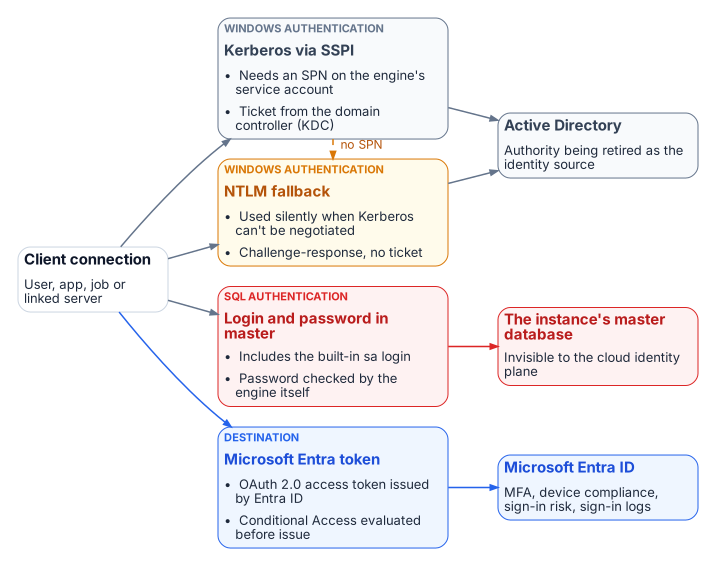
Names the core tension of the series: SQL Server’s Windows Authentication was the correct answer to the authentication problem of a fully domain-joined world. Describes what that architecture actually is — Kerberos via SSPI, SPN registration, NTLM fallback, service accounts, the sa account — and the three drivers that now require its replacement.
Note
SQL Server’s Windows Authentication was an act of good engineering, not negligence. This book makes the case for replacement without making the case that what came before was foolish — a precise account of what Windows Authentication is, why it worked, and why it must now end.
TipDownload this book
Book_01-bundle.docx — every chapter of this book concatenated into one Word document. Regenerated on every site deploy.
Chapters
| Title |
|---|
| What Windows Authentication Actually Is |
| Why the Inheritance Must End |
No matching items
Place in the dependency chain: Why the chain exists (before step 1).